
The latest appliances do far more than basic tasks.
Story by Tracy Dickinson
Photography Courtesy Ferguson Home
Featured in Spring 2026
Whether you’re choosing appliances for a new home or replacing aging units, the options available are almost mind-boggling. Selecting the best features for your needs doesn’t have to be overwhelming. With a bit of education on the possibilities, you can shop with real confidence.
Style
At the most recent Kitchen and Bath Industry Show, the hottest trends in appliances were all related to style: appliance color, handle color, and handle design.
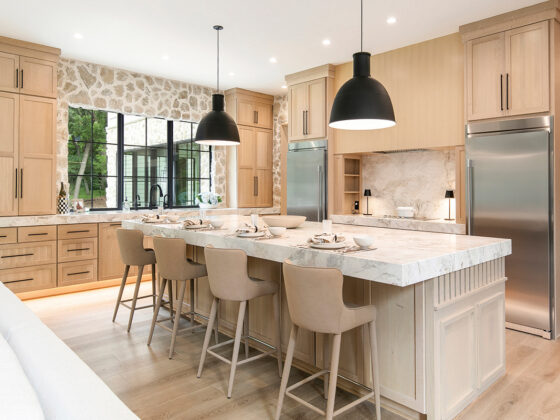
Whatever the style of your home, the trend in appliances is definitely highlighting the sleek and clean-lined appearance. In kitchens, homeowners want the cabinetry and the countertops to be the focus, not the appliances.
“The other thing we’re seeing a lot is built-in panels or panel-ready appliances,” says Caleb Kralik of Ferguson Home in Grimes. “Those are especially popular with fridges and dishwashers. Now homeowners want that sleek, contemporary look, where everything matches and no handles are sticking out.”
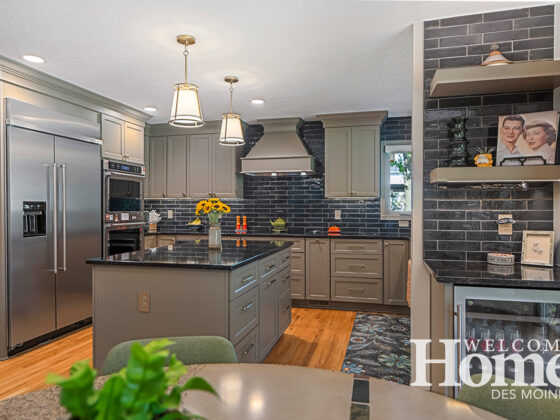
Although stainless steel is still the dominant finish in the kitchen and white is most typical in the laundry room, Kralik says color is making a comeback. “All your brands are offering more color options,” he says. “And we’re seeing a number of them coming out with a black stainless or a black slate. KitchenAid has a black ore and a new greenish shade, juniper, that’s really nice.”
Even more variety is available for laundry appliances, with washers and dryers available in the usual white, but also gray, blue, green, and red.
Not only can you choose the appliance color, but a number of manufacturers offer a variety of options for handle colors. “Stainless-steel handles are the standard. But with a lot of models, you can choose a different finish for the handles,” says Kralik.
With the popularity of mixed metals in other elements, such as lighting and faucets, homeowners are also opting for mixed metals on the appliances, choosing brass handles for their stainless-steel oven or black handles for the stainless-steel dishwasher.
Connectivity
“The most significant development with appliances right now is connectivity,” says Kralik. “So many appliances are connected to Wi-Fi. That means you can control them from your phone from anywhere.”
In addition to turning appliances on and off, you can do far more than that with some models. That includes checking the oven temperature to creating a grocery list based on the contents of your refrigerator.
“Manufacturers like Samsung have refrigerators where you can check the refrigerator when you’re at the grocery store and have it make a list for you. If you had apples in there, and you’ve taken out 3 apples, it will update that list for you,” he says.
“It used to be everyone had to have ice and water dispensers on the door of the fridge. …Now we’re seeing more refrigerators with ice dispensers inside the door and removable water pitchers inside the fridge.”
Caleb Kralik
Ferguson Home
Samsung also offers a number of units with screens on the door where you can stream television shows, movies, and music or look up recipes.
“There are also a couple of manufacturers who have oven models that have cameras on the inside,” Kralik says. “So not only can you control the temperature and turn things on and off, you can see how things are cooking. KitchenAid has one that can identify what you’re cooking and adjust accordingly.”
Refrigerators and ovens are the two most common appliances to offer smart controls. Some level of SMART® technology is also available on certain models of dishwashers, stove tops, even coffee makers.
Favorite Features
Features are available in each appliance category that most homeowners consider standard, but Kralik says preferences are really changing.
“It used to be everyone had to have ice and water dispensers on the door of the fridge, but we’re seeing a lot more people moving away from that,” he says. “That’s partly because they like the sleeker look. Now we’re seeing more refrigerators with ice dispensers inside the door and removable water pitchers inside the fridge.”
Counter-depth refrigerators are also the most common choice, especially with French doors and a freezer below. “Unless you’re replacing a full-depth refrigerator, counter-depth is easier to work with,” Kralik says. “You don’t have to design cabinetry or deeper counters to fit the larger refrigerator.”
Preferences vary in the laundry room. For smaller spaces, front-load, stackable units are a great option because they take up less square footage while offering larger capacity.
“We probably sell 50% front-load and 50% top-load now,” says Kralik. “Some are switching back to top-load because they’re concerned about mold or mildew or odors, which have been problems in the past with front-load machines. But manufacturers have addressed that by adding antimicrobial coatings.”
For kitchens, multifunction ovens and induction cooktops continue to offer the most advanced technology.
Few of the double ovens Ferguson sells are standard ovens. Kralik says the units offer a combination of features, including convection ovens, traditional ovens, microwaves, even air fryers.
“Induction cooktops are popular because they have that clean look everybody likes. But they also have other safety and efficiency features,” Kralik says. “With most cooktops, you turn the burner on, it gets red, and it gets hot right away. Induction units don’t get hot until you place the pot on the burner, and they heat it much more efficiently.”
Kralik says homeowner preference is the most important factor in selecting an appliance. Manufacturers are offering a range of products to suit those preferences, from basic units to all the bells and whistles you can imagine.
“Most customers come in here pretty well-educated,” he says. “They’ve done their research, they know what they want, and we just have to help them choose the best of all the great options available to them.” •
Resources
- Caleb Kralik Ferguson Home