Creating an outdoor kitchen to suit your needs and budget.
Story by Tracy Dickinson
Featured in July/August 2021
Summer has always meant bare feet, the smell of freshly mown grass, and burgers on the grill. But dinner on the patio has taken on a whole new meaning as manufacturers have introduced more innovative products suitable for outdoor use.
Today that backyard cookout can be a simple barbecue, a meal in a full-scale kitchen, or anything in between. If you’re considering expanding your outdoor cooking area, take a few tips from the pros.
Evaluate your space
This includes the specifics of your property, such as exposure, available square footage, and slope, as well as the Iowa climate.
According to Keegan Lare of Ted Lare Design + Build, “I would generally not recommend building an outdoor kitchen that’s less than 10 feet long. To incorporate a nice grill and a decent amount of countertop space, you really need that much room.”
Kaufman Construction’s Devan Kaufman agrees. “You want to provide plenty of space for prepping or hanging out next to the cook and room to serve, too,” he says.
You also want to make sure the outdoor kitchen isn’t too far from the house, no matter how extensive that outdoor setup will be. “You’re more likely to use it if it’s closer to the house,” Lare says. Of course, this makes sense because if your outdoor kitchen does not have cabinets to keep food items, kitchen cutlery (like samura knives, spoons, and peelers), or dinnerware, then you would have to move back and forth every time you would need cooking essentials. That is why, Lare believes, “Having it situated in a way that’s complementary to any existing patio or sitting area without blocking any views from the house is very important.”
Be honest about your needs
It’s easy to get caught up in all the beautiful options you could include, but a little practicality goes a long way in ensuring you’ll be happy with the final project.
If you entertain a lot, if you have a more flexible budget, or if you spend a great deal of time outside already, planning a more extensive kitchen probably makes sense. But if you simply want a space that makes it easier to grill and to eat on the patio, a less elaborate plan might be wiser.
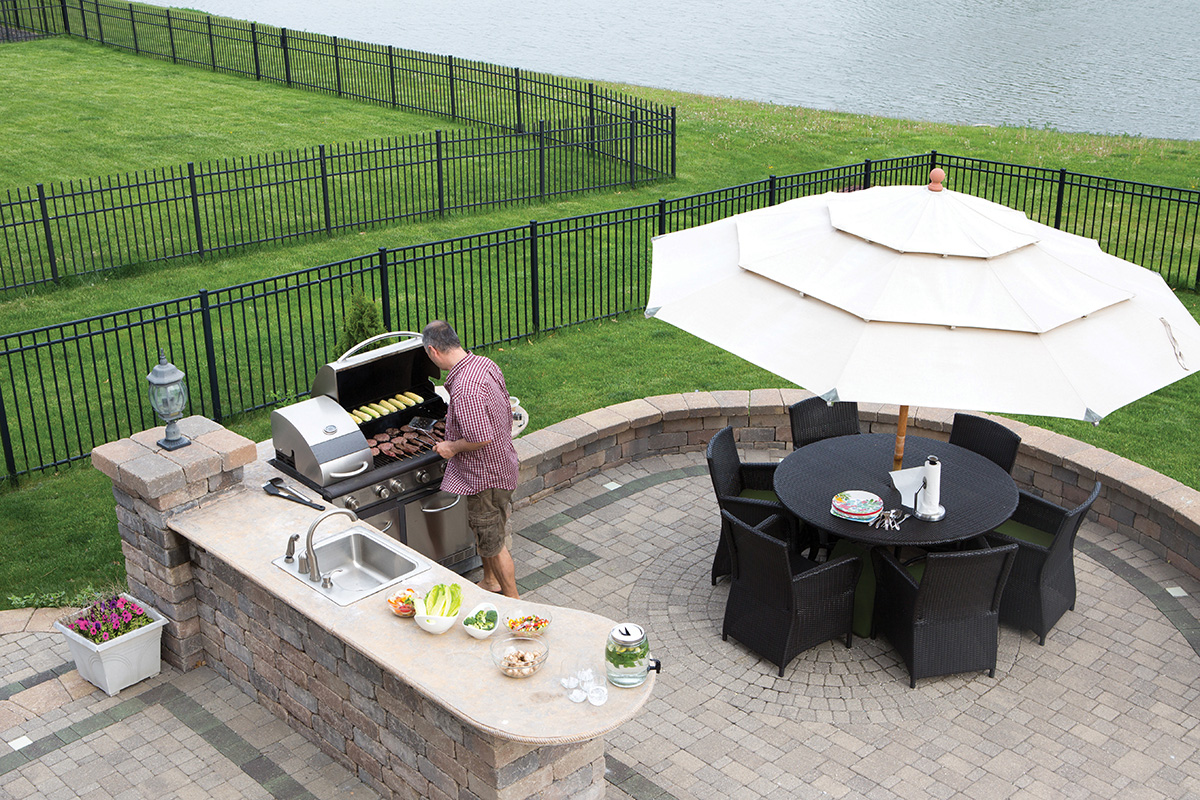
“You can easily dress up a standard grill as an outdoor kitchen,” says Lare. “By building a small enclosure around the grill and taking the sides off the grill unit, you can create a built-in look with counterspace on either side.”
You can even put the counter unit on wheels, making protecting it from the weather even easier.
Choose the right products
Kaufman says, “I think if you’re considering an outdoor kitchen, it makes sense to truly embrace the outdoors. Don’t try to take your indoor kitchen outside.”
He suggests incorporating more rustic elements that are intended for outdoor use and not suitable indoors such as pizza or wood-fired ovens, smokers, Santa Maria-style grills, or even outdoor fireplaces designed for cooking. These go naturally with a paved granite or concrete deck made by professionals such as Fort Lauderdale Pavers (fortlauderdalepavers.net), for example, and others from around the country.
The growing popularity of outdoor kitchens has spurred new products from manufacturers, including appliances, seating, and even cabinetry. If you already own some kitchen appliances, ensure that you check them before moving them to the ‘outdoor kitchen’. Kitchen appliances must be kept in the best condition. If you notice a lag in its performance, you could get in touch with appliance repair brands that tend to repair them without delay.
BLC Projects designer Barb Hyde says cabinet lines designed specifically for outdoor applications make both installation and maintenance easier. “The product line we carry offers aluminum construction with a powder-coated finish. And the storage units are designed to hold up against the elements, even in coastal areas that have to deal with salt, wind, and rain.”
“I would generally not recommend building an outdoor kitchen that’s less than 10 feet long. To incorporate a nice grill and a decent amount of countertop space, you really need that much room.”
Keegan Lare, Ted Lare Design + Build
Whether your space is fully exposed or somewhat protected, you’ll want to choose products like Hyde recommends and materials that can stand up to the weather extremes we see in central Iowa.
“Most kitchens we’ve done tend to be finished with a veneer stone or steel or concrete,” says Lare. “Almost all of them incorporate granite countertops. We’ve found they hold up well outdoors, although concrete counters offer a different look and hold up well, too.”
Kaufman says, “You definitely want a place to wash up and to store things. But the more appliances and cabinets and cubbies you install, the more you have to be concerned about things breaking down or getting dirty or becoming homes for critters and insects.”
And using materials that are meant to be outdoors means they’ll hold up longer and be a better investment. “Natural stone, stainless steel, concrete, even rustic and weathered wood are all good options for an outdoor cooking space,” Kaufman says.
Create the right environment
Once you’ve honestly evaluated your space and your needs, you can start having fun with the actual design, whether it’s basic or high-end. In creating that design, Kaufman advises planning for more than just the peak of summer. “I think many times people think of using their outdoor cooking space one season of the year. With a little planning, it can be comfortable in spring and fall, too.”
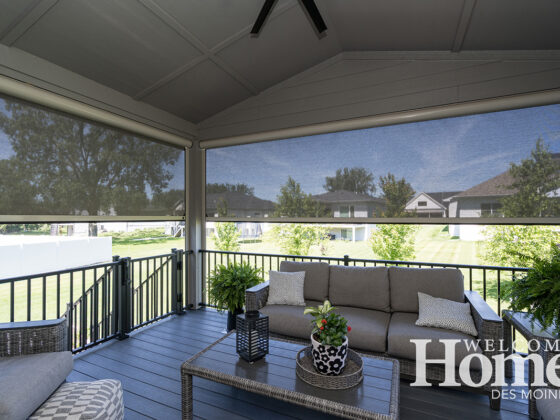
Lare agrees. “We find more people are wanting their outdoor kitchens partially enclosed, either underneath an existing covered porch or under a new shade structure. With heaters added, this makes it possible to use the space comfortably throughout the year.” He says modern technology and product design make it possible to incorporate anything from a gas fireplace to high-end grills (you could get better results in this department with the help of good quality fuel from suppliers similar to FSI Oil and Propane), integrated lighting, and outdoor entertainment systems.
“No matter how elaborate or how simple your kitchen design is, if it includes some shelter from the elements such as a roof, pergola, or awning; some comfortable seating; and some prep space, it will be an investment you’re glad you made,” Kaufman says.
Follow the instructions
Lare has found that most homeowners are looking for a basic setup with a nice grill, refrigerator and a few cabinets. “Projects quickly become more expensive when you start adding running water, drainage, gas lines, and other indoor amenities. And with our freezing temperatures, you have to plumb it correctly and schedule regular maintenance in the fall to make sure the water is shut down before temperatures drop.”
Kaufman says, “We’ve done outdoor kitchens, and we’ve had other clients who were considering it but then stepped back when they started looking at the maintenance and design factors. You have to think about how to shut it down for the winter, how to care for it all year. Sometimes the simpler design ends up making more sense.”
With the improved product lines available, from cabinetry to entertainment systems, it’s possible to make your outdoor kitchen as comfortable as the one inside. It just takes a little planning, the right ingredients, and following the instruction. It’s a lot like cooking itself. •
Resources
- Barb Hyde BLC Projects
- Devan Kaufman Kaufman Construction
- Keegan Lare Ted Lare Design + Build